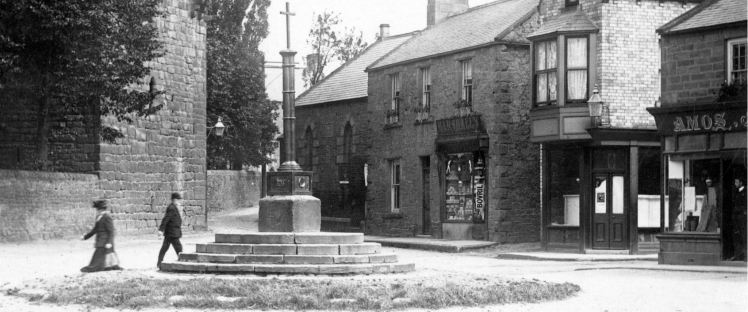
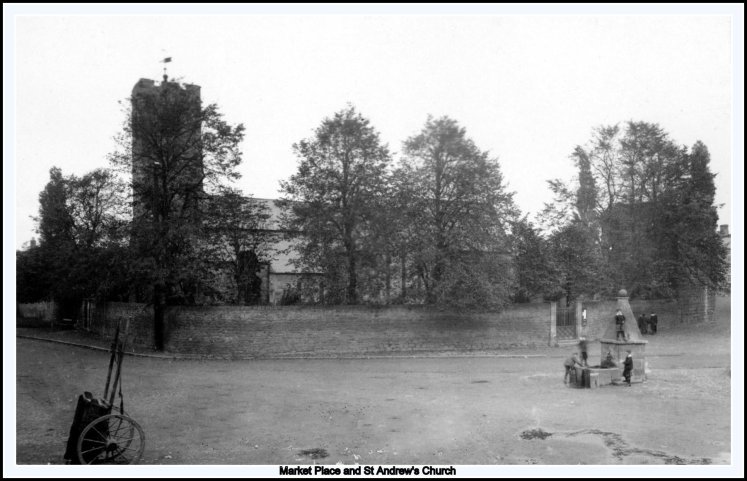
The Market Place is the ancient centre of the village from where streets still radiate in their 13th and 14th century pattern. A 14th century map shows the Market Place extending north to present day Well Bank and Hill Street and the whole area backed up by buildings. In medieval times there were shops and booths against the churchyard wall. Most of the present day buildings are well over 200 years old.
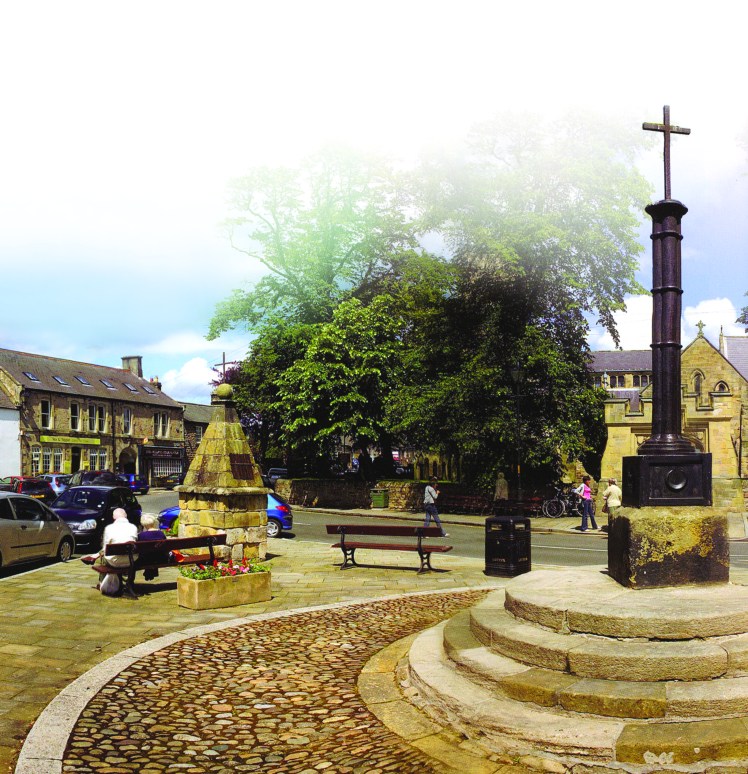
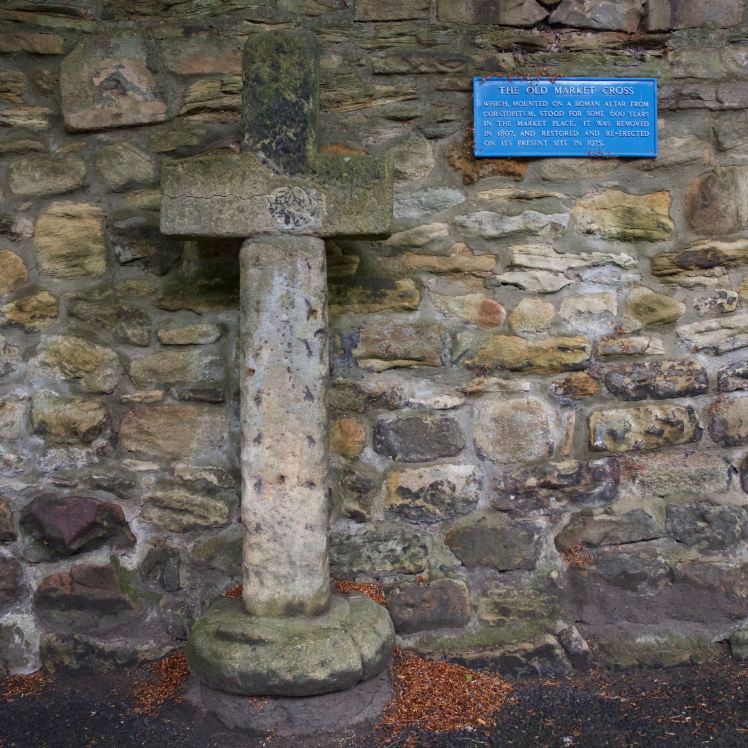
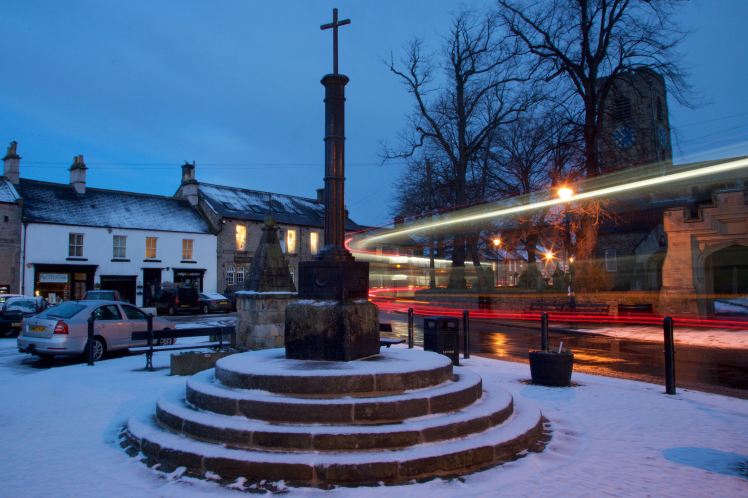
The original 13th century market cross, which was set upon a Roman altar that presumably came from the nearby Roman site, was taken down in 1907 and replaced in 1814 by the present day cast iron cross provided by the Lord of the Manor, the Duke of Northumberland. The cross has the Percy lion, the emblem of the Dukes of Northumberland, at its base. The original cross has been returned, thanks to the Village Trust, and stands by the entrance to the Vicar’s Pele.
Next to the present day cross is the Market Place pant which in 1815 replaced an earlier drinking fountain. On one side is a cow tail handle, implying that, initially, the water had to be pumped up. However, photos from later in the 19th century show water pouring from a faucet into a trough, suggesting that the 1836 pipeline from the spring in Carr’s Field eliminated the need for pumping.
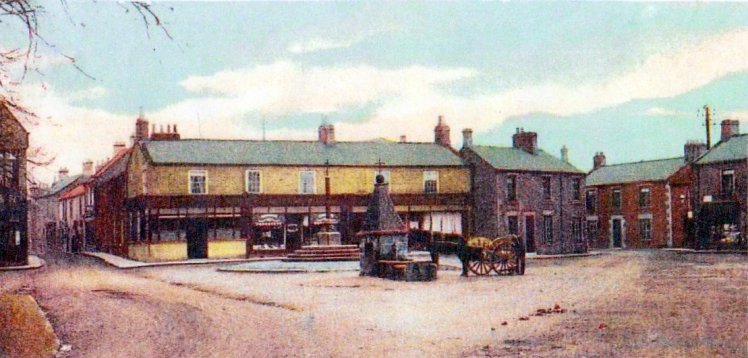
The upper storeys of the houses around the Market Place indicate the terraces must have always been pleasant houses and probably date from the 1700s.
Number 9 appears to have two front doors but this is one of several examples in the village with a legacy of former years when one of the doors would have been used to gain access to a yard at the back – for collecting middens 200 years ago, for delivering coal 100 years ago and for storing wheelie bins today.
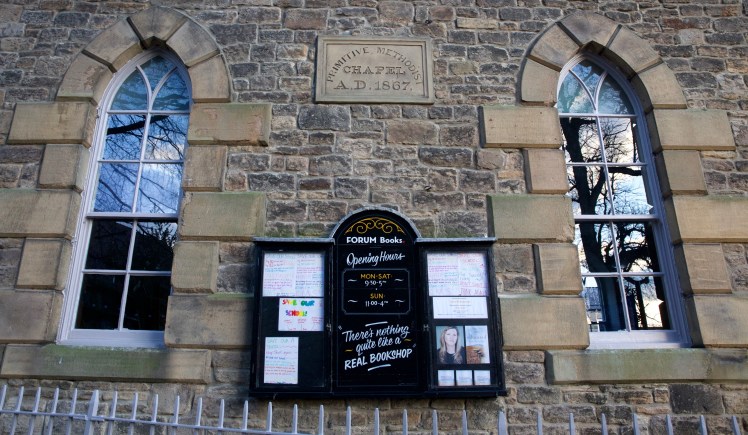
In the south east corner was Forum Books, which in Feb 2018 moved across Market Place to an impressive new home at ‘The Chapel’ – the former Methodist Chapel. Above the currently vacant old Forum Books’ shop is an Indian restaurant. On the east is a florist, a cafe, a greengrocer, a wine and spirits shop, a bakery and a traditional sweet shop.
The building that once included Barclays Bank, which closed in Nov 2017, was built in 1882 by the butcher Henry Ritchie. In 1920 the then tenant butcher Donald Hall sold the shop to Barclays and moved to Hill Street.
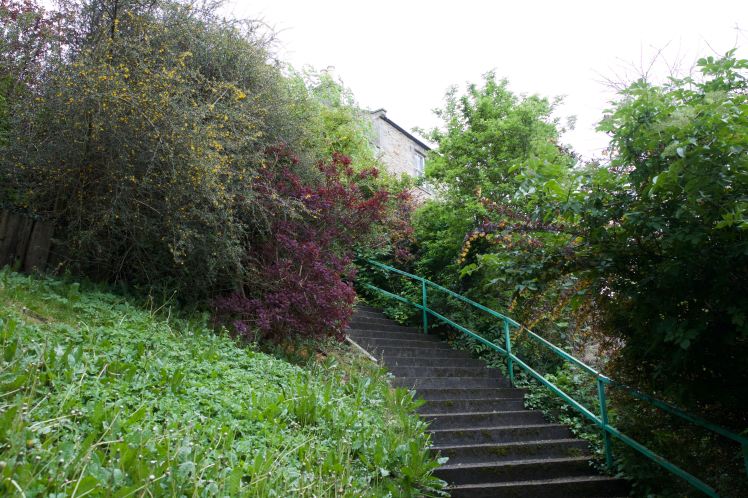
On the south wall of the bank a plaque records that ‘This land with access to the river was given to Corbridge by Barclays Bank Limited to mark the Silver Jubilee of H.M. Queen Elizabeth II in 1977.’ It is known as Barclays Garden.

The King’s Oven was located near the west end of St Andrew’s Church. Its exact position can still be seen by the square stones in the pavement found in front of the churchyard wall. First used in 1310 it was ‘the communal oven for the baking of the villagers’ bread and meat’. It was last used, according to a plaque, in the 19th century.
Riverhill, on the corner with Well Bank, was where the Red Cross met before moving to St Helen’s Street in 1951. Built by Mr Lowery, a surgeon with a memorial in the churchyard, it is now a residential care home.
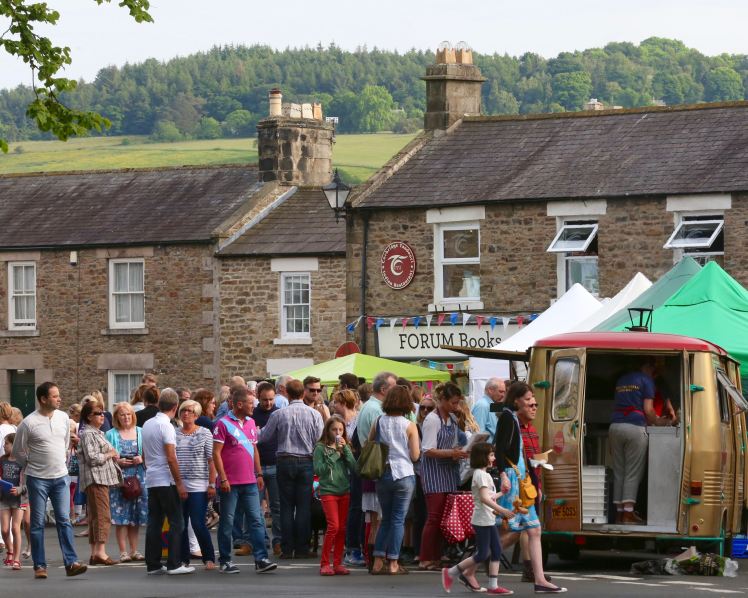
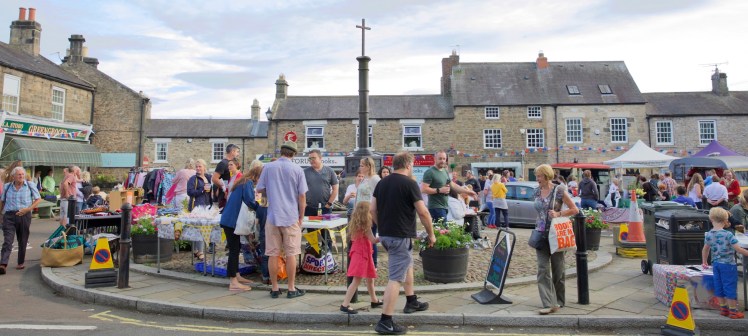
Today the Parish Council is making efforts to gain control of parking in Market Place with the long term aim of removing many of the vehicles and restoring the location as the heart of the village for local community use.
 Historic Corbridge